
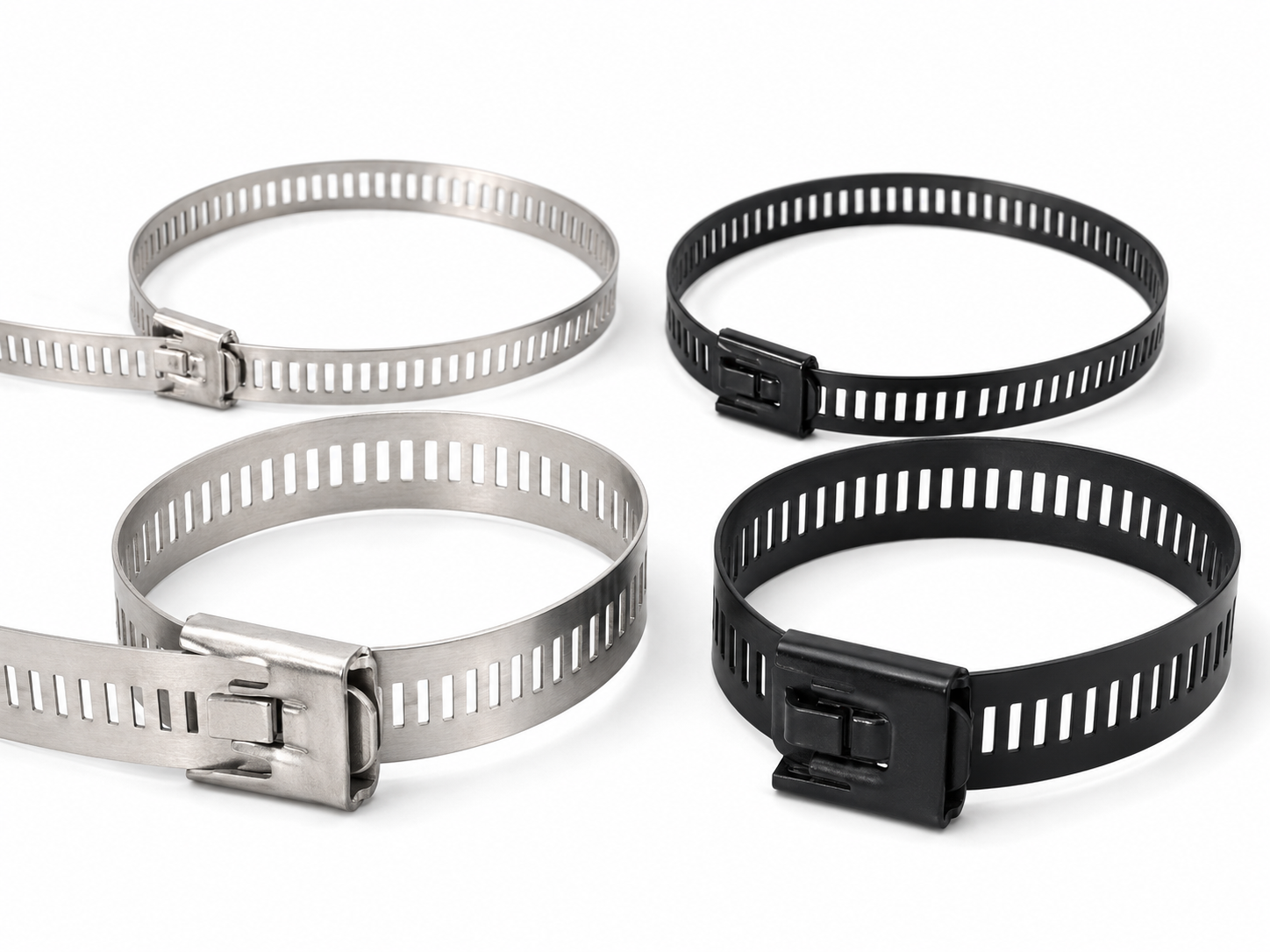
B-Tec Innovations Multi-Lock ties are supplied in natural uncoated and black polyester-coated Grade 316 stainless steel.
Why Fastener Choice Matters on Vibration-Prone Routes
Continuous movement from motors, pumps, compressors, rolling stock, conveyors and outdoor structures exposed to wind can work cable bundles loose, wear insulation and let cables sag onto hot or sharp surfaces. Plastic ties can also degrade under UV and heat. Stainless steel cable ties are widely specified where a durable metal fastener is needed for these conditions.
B-Tec Innovations does not publish a vibration rating or vibration test standard for its Multi-Lock range. The guidance here therefore focuses on documented properties—material, finish, width, tensile strength, bundle diameter and temperature range—so you can shortlist a tie and then confirm suitability for your specific installation.
How Multi-Lock Fastening Works
A Multi-Lock cable tie is a distinct locking design from the Roller Ball Lock tie. Instead of relying on a single rolling ball wedging the strap inside the head, a Multi-Lock tie is designed to engage the strap at more than one locking point as it is tensioned. Buyers usually consider this style where they want a positive, adjustable lock on bundles that will see movement in service.
Because detailed locking geometry is not published on the product page, treat this as a design overview. Ask B-Tec Innovations for a sample or drawing if your engineering approval requires the exact locking mechanism to be documented.
SS316 Material: Why Grade 316 Is Used
Every B-Tec Innovations Multi-Lock tie is manufactured from Grade 316 stainless steel. SS316 contains molybdenum, which gives it greater resistance to chlorides and many industrial chemicals than SS304. That makes it a common choice for coastal sites, chemical and process plants, water treatment and outdoor installations. Both variants are described as UV resistant, weatherproof and suitable for indoor and outdoor use.
Comparing grades for a wider project? Read the SS304 vs SS316 stainless steel cable ties comparison.
Coated vs Uncoated: BT6MUNC and BT6MEFC
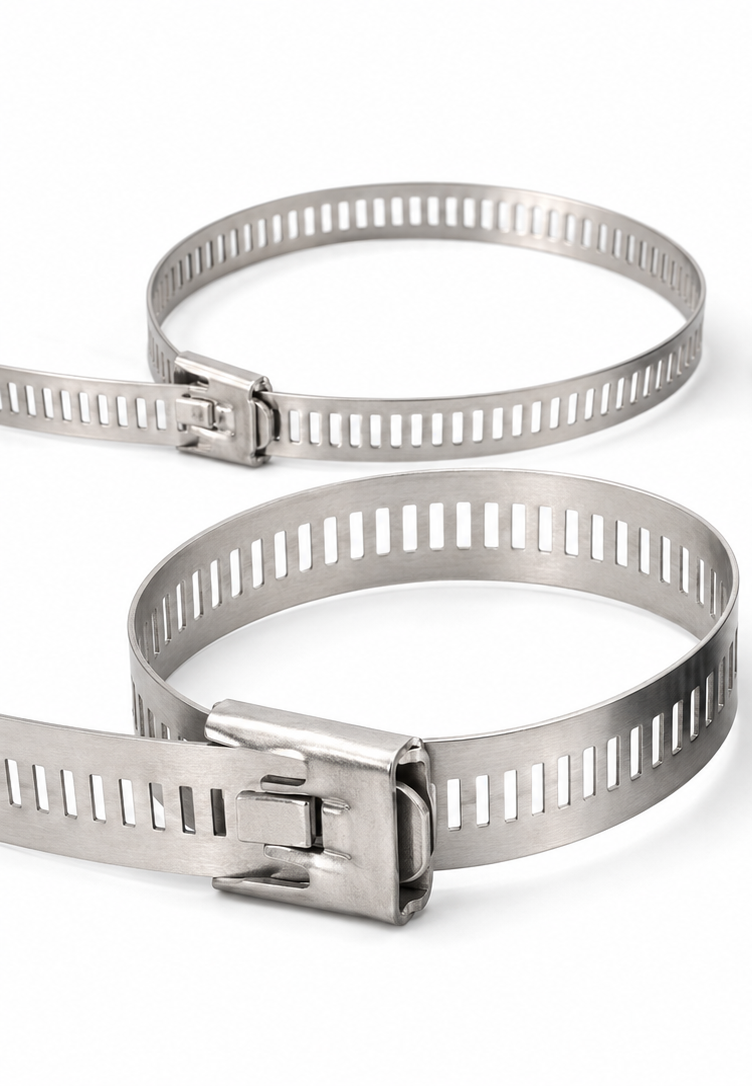
- Choose uncoated BT6MUNC where the documented high-temperature range matters, such as near exhausts, furnaces or hot process lines.
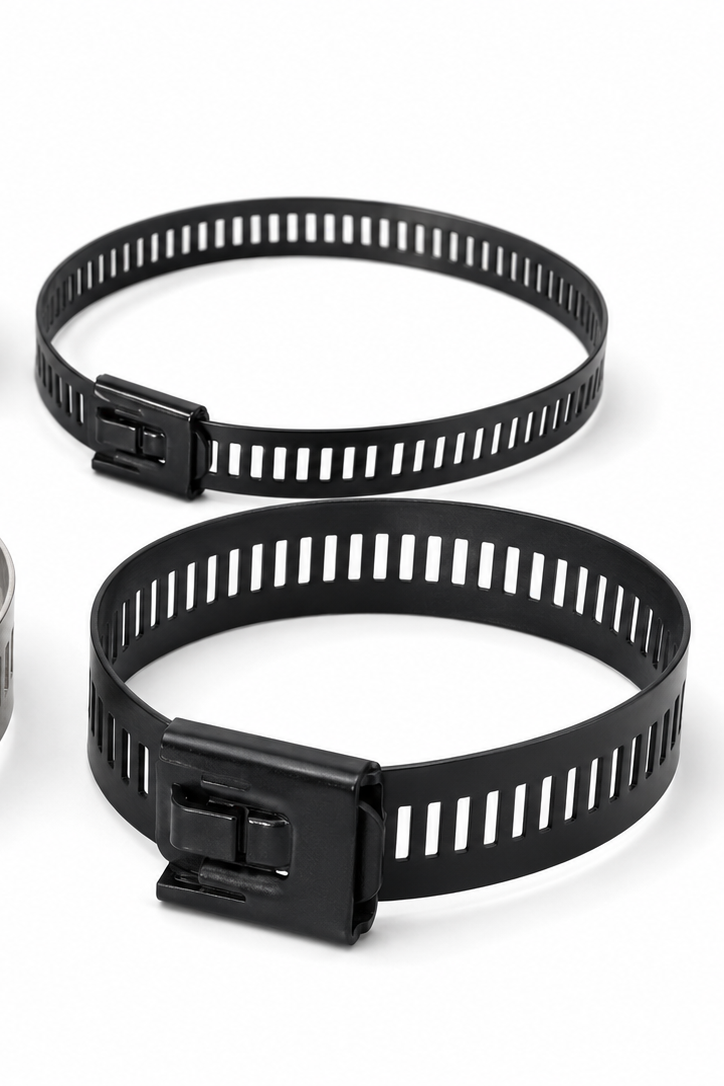
- Choose polyester-coated BT6MEFC where the coating helps separate bare steel from cable jackets or dissimilar metals, and where low smoke and zero halogen properties are specified—within its lower −40°C to 150°C range.
- Do not use the coated variant above its documented 150°C limit.
Documented Widths and Tensile Specifications
The table summarises figures from the B-Tec Innovations Multi-Lock cable ties product page. All ties are supplied in packs of 100 pieces.
| Part code | Finish | Width | Lengths | Thickness | Max bundle dia | Min loop tensile | Temperature |
|---|---|---|---|---|---|---|---|
| BT6MUNC | SS316 uncoated | 7 mm | 150–610 mm | 0.3 mm | 37–179 mm | 1110 N (250 lbs) | −80°C to 538°C |
| BT6MUNC | SS316 uncoated | 12 mm | 150–760 mm | 0.3 mm | 37–220 mm | 2000 N (450 lbs) | −80°C to 538°C |
| BT6MEFC | SS316 polyester coated | 7 mm | 150–610 mm | 0.3 mm | 37–179 mm | 1110 N (250 lbs) | −40°C to 150°C |
| BT6MEFC | SS316 polyester coated | 12 mm | 150–760 mm | 0.35 mm | 37–220 mm | 2000 N (450 lbs) | −40°C to 150°C |
Exact length steps are 150, 225, 300, 450 and 610 mm for 7 mm ties, with an additional 760 mm length for 12 mm ties. See the product page for each length’s bundle diameter and pack weight.
Vibration-Related Applications in Indian Industry
Across India, Multi-Lock stainless steel cable ties are relevant wherever cable routes are exposed to movement, weather or heat:
- Railway and metro rolling stock, trackside equipment and signalling cable routes.
- Solar plants and outdoor structures exposed to wind, UV and temperature swings.
- Power generation, substations and transformer yards.
- Heavy engineering, cement, steel and mining plants with motors, crushers and conveyors.
- Oil, gas, petrochemical and chemical process facilities, including coastal sites.
- Ports, shipyards and marine installations where chloride exposure favours SS316.
These are typical application environments, not certified approvals. Always confirm suitability against your project specification.
How to Select the Right Multi-Lock Tie
- Width and load: choose 12 mm (2000 N) for heavier bundles or higher-load points; 7 mm (1110 N) for lighter bundles.
- Length: select a length whose documented maximum bundle diameter exceeds your bundle, allowing tail for tensioning.
- Temperature: uncoated for −80°C to 538°C; coated for −40°C to 150°C.
- Fire behaviour: uncoated is listed as fire proof; coated as fire retardant, zero halogen and low smoke.
- Contact surface: consider the coated finish where bare steel contact with cable jackets is a concern.
If you need widths, grades or strengths outside this range, compare the Roller Ball Lock stainless steel cable ties.
Installation Considerations
- Use a listed tool: BTST020 tensioning hook is listed for Multi-Lock and Releasable Ties; BTCT007 is documented for cable ties from 4.6 mm to 12 mm.
- Tension consistently so the bundle is secure without crushing cable insulation.
- Cut tails flush and avoid leaving sharp edges near personnel or cable jackets.
- Space ties at regular intervals on vibrating runs so no single tie carries the full movement.
- Inspect periodically on high-movement equipment as part of routine maintenance.
See B-Tec Innovations hand tools for tool specifications.
Common Multi-Lock Cable Tie Buying Mistakes
Most problems with stainless steel cable ties on vibrating equipment start at the specification stage, not during installation. Reviewing these points before ordering helps avoid replacement work and site delays.
- Specifying by width alone without checking that the chosen length covers the actual bundle diameter.
- Selecting the coated BT6MEFC variant for a hot zone above its documented 150°C limit.
- Assuming an unpublished vibration rating or third-party approval; request written confirmation if your project requires one.
- Mixing tie styles on one run without confirming that the installation tool suits each tie.
- Ordering a single length for an entire site when bundle sizes vary between equipment, trays and outdoor structures.
- Leaving out operating temperature, chemical exposure or coastal location from the enquiry, which limits technical review.
Where a project combines different fastening needs—for example, permanent cable bundling alongside banding for insulation or signage—list every item in one enquiry so B-Tec Innovations can review the complete package together.
RFQ Checklist for Multi-Lock Cable Ties
- Part code: BT6MUNC (uncoated) or BT6MEFC (coated)
- Width (7 or 12 mm) and length
- Quantity (packs of 100 pieces)
- Bundle diameter and operating temperature
- Application and vibration conditions
- Installation tool, if required
- Delivery location in India and any documentation needed
Frequently Asked Questions
What is the difference between BT6MUNC and BT6MEFC?+
Both are Grade 316 Multi-Lock stainless steel cable ties from B-Tec Innovations. BT6MUNC is uncoated, with a documented range of −80°C to 538°C and a fire-proof rating. BT6MEFC is polyester coated, with a documented range of −40°C to 150°C and is described as fire retardant, non-toxic, zero halogen and low smoke.
Which widths and tensile strengths are available?+
Both variants are listed in 7 mm and 12 mm widths. The documented minimum loop tensile strength is 1110 N (250 lbs) for 7 mm ties and 2000 N (450 lbs) for 12 mm ties.
Are Multi-Lock ties certified for a specific vibration level?+
No vibration rating or test standard is published for these ties. Choose them as a robust Grade 316 option for vibration-prone routes, and send the application details to B-Tec Innovations for review rather than assuming a rated vibration performance.
When should I choose Roller Ball Lock ties instead?+
Roller Ball Lock ties offer a wider range of widths and SS grades. Compare both product pages when your specification requires a width, grade or tensile value outside the documented Multi-Lock range.
Which tools are listed for Multi-Lock ties?+
BTST020 is a cable tie tensioning hook listed for Multi-Lock and Releasable Ties. BTCT007 is a tensioning and manual cutting tool documented for cable ties from 4.6 mm to 12 mm. Confirm the tool for your exact tie before ordering.
What should a Multi-Lock cable tie RFQ include?+
Include the part code, coated or uncoated finish, width, length, quantity in packs of 100, bundle diameter, operating temperature, application, any required installation tool and the delivery location in India.
Request a Multi-Lock Cable Tie Quote
Send your part code, size, quantity and application details to B-Tec Innovations for a technical review and quotation.